Why is My EV Charging So Slow? (10 Common Reasons & Fixes)
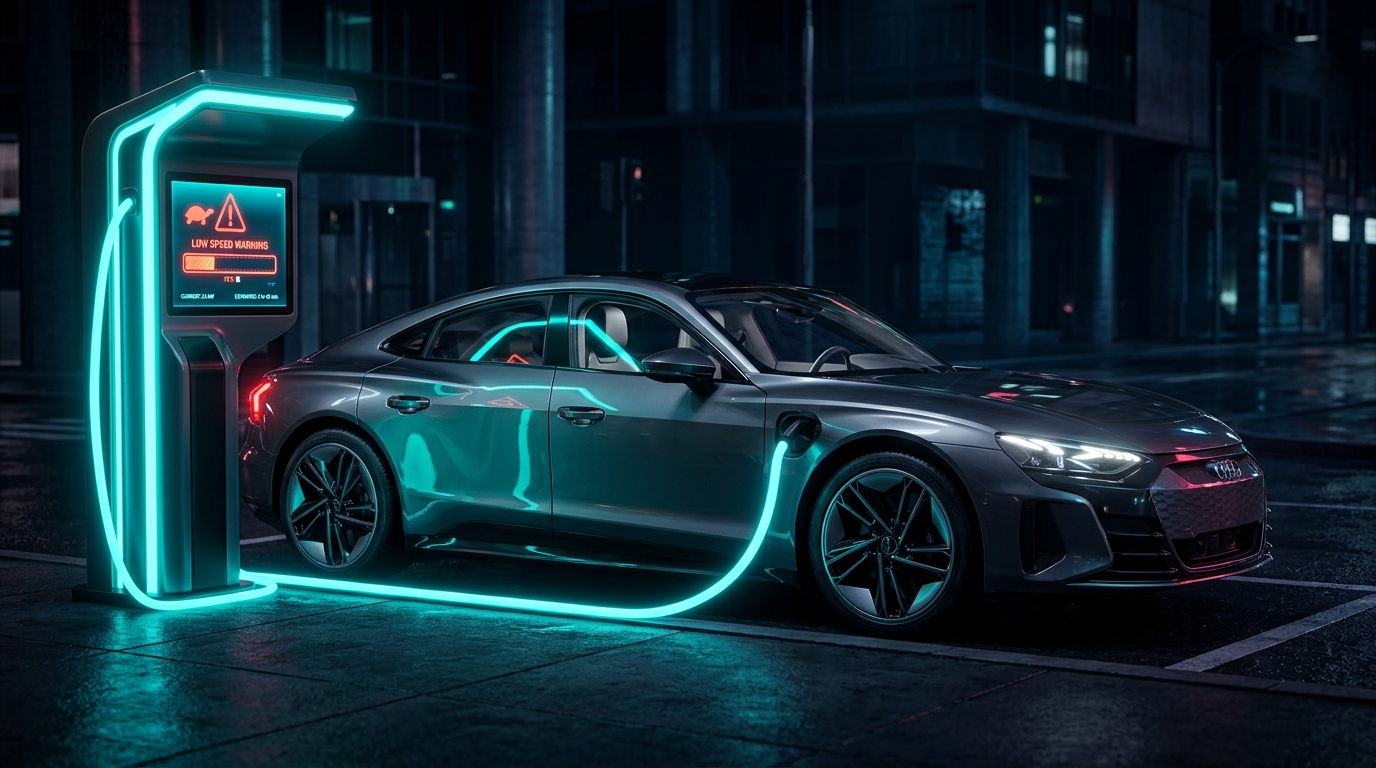
It is one of the most frustrating experiences for an electric vehicle (EV) owner: you pull up to a high-powered public DC fast charger, plug in, and expect to see your battery percentage soar. Instead, you look at the screen and see the charging rate trickling in at a fraction of the station’s advertised speed.
Why does this happen, and is there something wrong with your car or the charger?
More often than not, slow charging speeds are caused by protective safety limits, environmental factors, or configuration bottlenecks. In this troubleshooting guide, we break down the top 10 reasons why your EV is charging slowly and show you how to fix them.
⚡ The EV Charging Pipeline (Where is the Bottleneck?)
To understand why your charge speed drops, think of the charging process as a series of pipes. The charging speed can only be as fast as the narrowest pipe in the flow:
flowchart LR
    Grid["🌐 1. Utility Grid<br/>(Capacity Limits)"]
    Station["🔌 2. Charging Station<br/>(Dispenser & Cable)"]
    OBC["🚗 3. Onboard Charger<br/>(AC/DC Converter)"]
    Battery["🔋 4. EV Battery Cells<br/>(BMS Temp & SoC)"]

    Grid -->|Power Supplied| Station
    Station -->|Current Delivered| OBC
    OBC -->|Voltage & Temp Limits| Battery
If any one of these pipes is restricted—whether by battery temperature, grid limits, or vehicle software—the entire session slows down.
🔍 The 10 Most Common Reasons for Slow EV Charging
Here is a summary of the top factors that slow down EV charging, their indicators, and what you can do about them:
| # | The Issue | Primary Indicator | Where it Occurs | The Fix / Action |
|---|---|---|---|---|
| 1 | State of Charge (SoC) is too high | Charging drops off a cliff after 80% | DC Fast Chargers | Unplug at 80% and drive to the next stop. |
| 2 | Cold battery temperature | Speed starts low and rises slowly | All Chargers | Pre-condition your battery before arriving. |
| 3 | Shared charger cabinet power | Speed drops when another car plugs in nearby | Public Chargers | Try to choose a stall that doesn’t share power. |
| 4 | Vehicle Onboard Charger (OBC) cap | Charging is capped at 7.2 kW or 11 kW | Home (AC) Chargers | Standard limit. Capped by your car’s AC converter. |
| 5 | Charger cable cooling fault | Station screen shows reduced current output | Public Chargers | Move to a different charger unit. |
| 6 | Utility grid curtailment | Capped speed during peak hours (e.g. 5–8 PM) | Public Chargers | Charge during off-peak hours when possible. |
| 7 | Using an unsafe extension cord | Voltage drop, warm plug, or tripped breakers | Home (AC) Chargers | Avoid extension cords; use a dedicated heavy-duty outlet. |
| 8 | High battery temperature (Thermal limit) | Charge drops on road trips (“Rapidgate”) | DC Fast Chargers | Let the vehicle rest or drive slower to cool down. |
| 9 | Vehicle system settings / limits | Charge limit manually set to low in infotainment | Home & Public | Change charge limit settings in the vehicle screen. |
| 10 | Charger hardware degradation | Dirty, worn, or loose connector pins | All Chargers | Inspect the plug for damage; report issues to network. |
1. Your Battery State of Charge (SoC) is Over 80%
This is the most common reason for unexpected slowdowns. Due to the physics of lithium-ion cells, charging speeds drop dramatically after the battery crosses 80% capacity. This prevents the cells from overheating and avoids a permanent damage phenomenon called lithium plating.
[!WARNING]
Top-off charging (from 80% to 100%) at a DC fast charger can take longer than charging from 10% to 80%. Unless you absolutely need the range to reach your destination, unplug at 80% to save time and money.
2. The Battery is Too Cold (Coldgate)
Lithium ions move slowly in cold temperatures. If your battery’s internal temperature is low, the vehicle’s Battery Management System (BMS) will restrict charging speeds to protect the battery from damage.
[!TIP]
How to Fix it: Use your EV’s built-in navigation system to route to the charger. Many modern EVs will automatically pre-condition (warm up) the battery en route so it is ready to accept max speed when you plug in.
3. Split-Power Charging Stalls
Many public charging sites use shared power cabinets. For example, a cabinet rated for 350 kW might power two stalls. If you plug in while the other stall is empty, you get the full 350 kW. If another EV plugs in next to you, the cabinet splits the power, instantly cutting your charging speed in half.
- Tip: Look for standalone chargers or prioritize stalls where the paired stall is unoccupied.
4. You Have Reached Your Vehicle’s AC Limit (OBC Capped)
If you plug into a Level 2 home charger that is capable of delivering 11.5 kW (48 Amps), but your car is only charging at 7.4 kW, you have hit your car’s Onboard Charger (OBC) limit.
- Level 2 home charging uses AC electricity. The car must convert this to DC using its OBC.
- Many older or smaller EVs have OBCs capped at 6.6 kW or 7.4 kW. Even if you plug into a faster charger, the car cannot pull more than its OBC limit.
5. Liquid-Cooled Charging Cable Issues
Ultra-fast chargers (150 kW+) generate extreme heat. To handle this safely, their heavy cables are filled with liquid coolant. If the station’s cooling pump fails or the coolant level is low, the station will automatically throttle the power output (often down to 50 kW or less) to prevent the cable from melting.
- Tip: If the cable or plug handle feels unusually warm and the speed is extremely slow, move to a different unit and report the station to the network operator.
6. Grid Demand Curtailment (Peak Hours)
During periods of high regional electricity demand (usually between 4:00 PM and 9:00 PM), utility companies can request charging networks to throttle their power consumption to avoid overloading the grid. This is called curtailment or demand response.
7. Voltage Drop from Extension Cords
If you are charging at home using a standard Level 1 wall outlet and an extension cord, you will experience voltage drop due to electrical resistance. This not only slows down charging but poses a serious fire hazard.
[!IMPORTANT]
Never use standard household extension cords for EV charging. If you must use one in an emergency, ensure it is a heavy-duty, outdoor-rated 10 AWG or 12 AWG cable kept as short as possible.
8. Battery Overheating (Rapidgate)
Just as cold temperatures slow down charging, extreme heat does too. If you are on a long road trip making multiple DC fast charging stops in hot weather, your battery temperature will climb. To prevent thermal runaway, the BMS will scale back charging speeds.
9. Vehicle In-Car Limitations
Some EVs allow you to set manual limits on AC or DC charging speeds directly through the dashboard infotainment screen (often done to reduce battery wear when charging overnight).
- Fix: Check your vehicle’s charging settings menu to ensure that “Charging Current” or “Max Charge Rate” is set to Maximum.
10. Worn Out Hardware or Dirty Pins
Over time, public charger connectors get dropped, dirty, and worn down. If the temperature sensors inside the plug detect resistance from dirty or loose connection pins, the charger will drop to a safe, slow speed to avoid melting the plug.
📊 Calculate Your Expected Charging Time
Want to see how fast your specific EV should charge under ideal conditions? Use our interactive tools to calculate your exact charging speed:
- Check out our free EV Charge Time Calculator to estimate home and public charging durations for your exact model.
- To see how battery degradation and cold temperatures impact your real-world mileage, use the Real-World EV Range Calculator.