When Is the Best Time to Charge an EV? (Cost & Speed Guide)
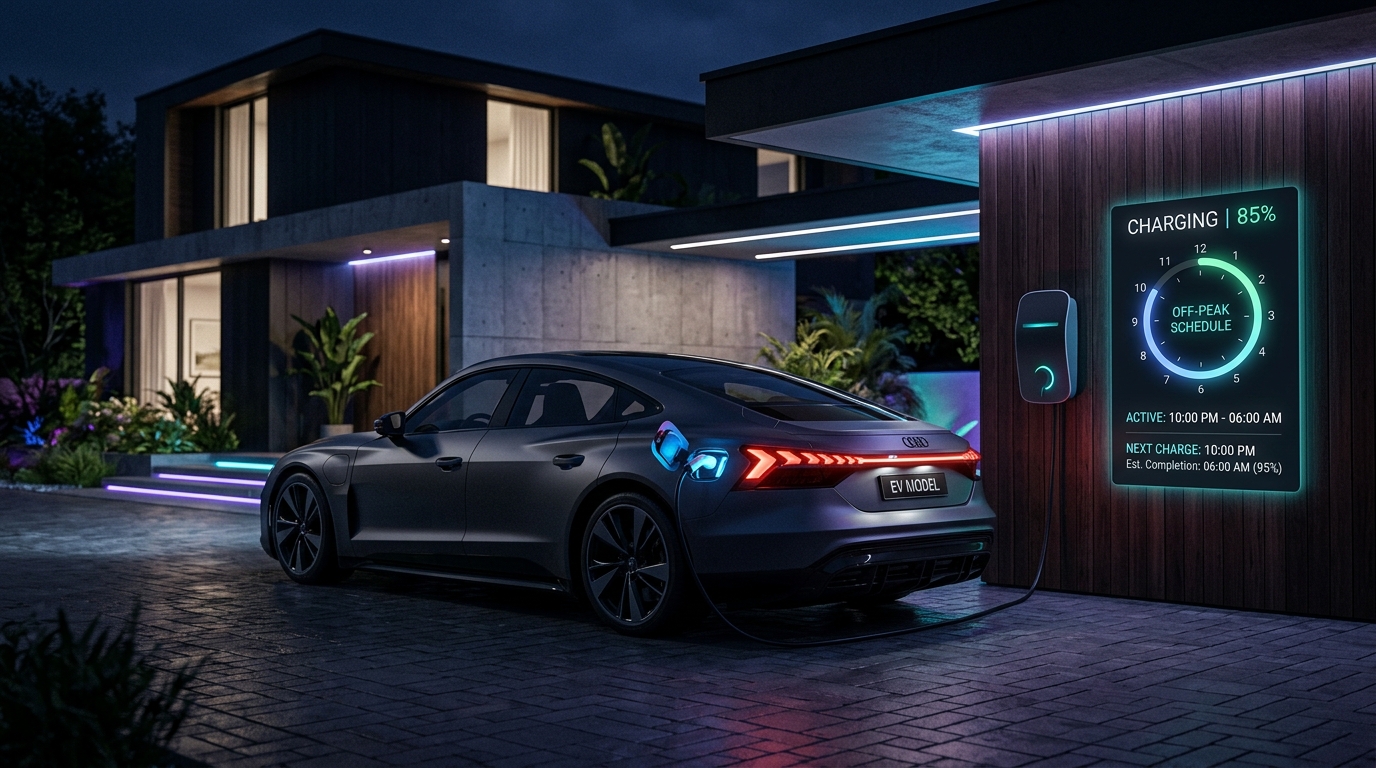
For new electric vehicle (EV) owners, plugging in a car can feel like plugging in a giant smartphone. You get home, plug it in, and let it charge. But unlike a phone, an EV draws a massive amount of power. When you plug in your car, how much you pay, how fast it charges, and even where that electricity comes from can vary drastically depending on the clock.
So, when is the best time to charge an EV?
The short answer is: At night, during off-peak hours (usually between 11:00 PM and 7:00 AM).
Charging your EV during off-peak hours can slash your charging costs by up to 50% or more, reduce stress on the electrical grid, and ensure you use cleaner, more sustainable energy. In this ultimate guide, we will break down the science of EV charging schedules, compare charging costs, and explain how temperature and battery health affect the optimal charging window.
🚗 The Highway Traffic Analogy: Understanding Grid Demand
To understand why the time of day matters, let’s use the Highway Traffic Analogy.
Think of the electrical grid as a massive metropolitan highway.
- Peak Hours (5:00 PM to 9:00 PM): This is rush hour. Everyone is getting home, turning on air conditioners, cooking dinner, running dishwashers. The highway is jammed. To keep traffic moving, utility companies have to fire up expensive, high-pollution “peaker” power plants. Charging your EV now is like trying to drive during rush hour—it’s slow, costly, and resource-heavy.
- Off-Peak Hours (11:00 PM to 7:00 AM): This is 3:00 AM on the highway. Almost everyone is asleep. The factories are closed, and residential power demand drops to its lowest level. The highway is completely clear. Electricity flows freely, and utilities often slash rates to encourage you to use this idle capacity.
By scheduling your EV to charge at night, you are driving on an empty highway. You get the same energy, but at a fraction of the cost and with much less stress on the grid.
graph TD
    A[Grid Load & Time of Day] --> B(Peak Hours: 5 PM - 9 PM)
    A --> C(Off-Peak Hours: 11 PM - 7 AM)
    B --> D[High Electricity Rates & Coal/Gas Peaker Plants]
    C --> E[Low Electricity Rates & Cleaner Base Energy]
    D --> F[High Cost / High Grid Strain]
    E --> G[Low Cost / Eco-Friendly Charging]
💰 The Financial Impact: On-Peak vs. Off-Peak Costs
Many utility providers offer Time-of-Use (TOU) tariffs. Under a TOU rate plan, the price you pay per kilowatt-hour (kWh) changes based on the time of day.
Let’s look at a typical comparison of charging costs for a standard EV with a 60 kWh battery pack (like a Tesla Model 3 or Hyundai Kona Electric) under standard peak and off-peak utility rates:
| Rate Category | Time Window | Average Rate (per kWh) | Cost for a Full Charge (10% to 100%) | Estimated Annual Cost (12,000 miles/year) |
|---|---|---|---|---|
| Peak Rates | 5:00 PM – 9:00 PM | $0.35 | $18.90 | $1,290.00 |
| Standard Rates | 7:00 AM – 5:00 PM | $0.18 | $9.72 | $663.00 |
| Off-Peak Rates | 11:00 PM – 7:00 AM | $0.08 | $4.32 | $295.00 |
[!TIP] By switching your utility plan to a Time-of-Use (TOU) tariff and scheduling your EV to charge exclusively after 11:00 PM, you can save over $900 per year compared to charging during peak hours!
🌡️ The Chemistry of Charging: Temperature & Speed
While cost is the biggest factor for home charging, temperature dictates the best time to charge for speed and battery longevity, especially when using public rapid chargers.
Lithium-ion batteries are like a theater. The lithium ions are the theater-goers, and the anodes/cathodes are the seats.
- When the battery is too cold, the “aisles” are frozen. The lithium ions move slowly and struggle to find their seats. If you charge a freezing battery at high speeds, it can cause “lithium plating,” permanently damaging the battery.
- When the battery is too hot, the chemical reactions accelerate too much, causing thermal stress and accelerating degradation.
[!WARNING] Never fast-charge your EV immediately after heavy driving in hot weather or when the car has been sitting in freezing temperatures. Most modern EVs have battery thermal management systems (BTMS) that warm or cool the battery, but this consumes extra energy and slows down your charge rate.
For optimal charging speed and battery protection:
- In the Winter: Charge your EV immediately after driving while the battery is still warm from operation. This reduces the time needed for the battery heater to run.
- In the Summer: Charge overnight or in the early morning when ambient temperatures are cool, preventing the battery from overheating.
⚡ Key Habits for Smart EV Charging
To maximize your EV’s lifespan and minimize charging costs, implement these four habits today:
1. Set a Charging Schedule
You do not need to wake up at 11:00 PM to plug your car in. Almost all modern EVs and smart home chargers (Level 2) allow you to configure a charging window via their mobile app. You plug the car in when you get home at 6:00 PM, but the car will wait until 11:00 PM to start drawing power.
2. Follow the 80% Rule for Daily Use
For daily commuting, set your car’s charge limit to 80%. Charging from 80% to 100% takes a long time and puts the battery under high voltage stress, which degrades the cells faster over time. Only charge to 100% when preparing for a long road trip.
3. Take Advantage of Solar Windows
If you have home solar panels, the “best time to charge” shifts to midday (10:00 AM to 2:00 PM) when your panels are producing peak electricity. Charging during this time means you are running your vehicle on 100% free, self-generated green energy.
🔌 Need to Calculate Your Exact Charge Time?
Charging speed depends heavily on your vehicle’s onboard charger capacity and the power output of the charging station. Use our free tool to get precise estimates for your specific EV model:
- Estimate your home and public charging speeds with our EV Charge Time Calculator.
- Check your real-world driving mileage with our Real-World EV Range Calculator.
- Browse individual charging specifications in our comprehensive EV Database.