Is It Safe to Charge an EV in the Rain? (Safety Guide & Tips)
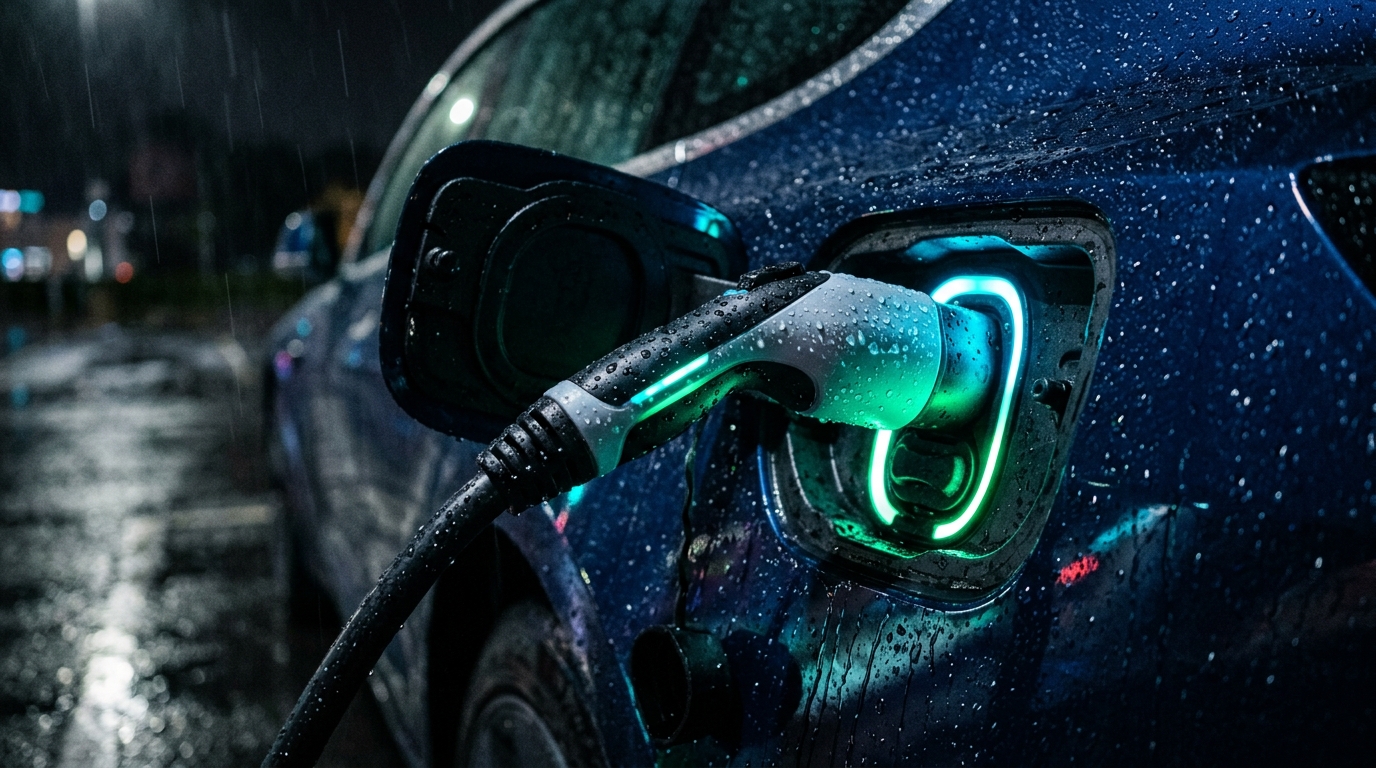
It is one of the most common questions new electric vehicle (EV) owners ask, and it is a completely natural concern: Is it safe to charge an EV in the rain?
After all, we are taught from childhood that electricity and water are a lethal combination. The idea of standing outdoors on a wet driveway, holding a heavy-duty electrical connector, and plugging it into a car carrying up to 400 or 800 volts of electricity can feel counterintuitive, if not downright terrifying.
The short answer is: Yes, it is 100% safe to charge an electric car in the rain.
Electric vehicles and the charging stations that power them are engineered with multiple layers of redundant safety features specifically designed to handle wet conditions, snow, ice, and even heavy downpours. In this comprehensive safety guide, we will look at how this safety is achieved, how the technology works, and the essential safety tips you should follow.
⚡ The Science of Wet Charging: Why It Is Safe
How can a high-voltage system operate safely in a rainstorm? It isn’t luck; it’s a combination of international engineering standards, physical insulation, and smart software protocols.
The safety system relies on three main lines of defense:
1. The Electrical “Handshake” Protocol
When you plug a charging cable into your EV, no electricity flows through the cable initially.
The copper pins inside the connector are completely dead until a computer communication protocol completes. The car and the charger must perform an electronic “handshake” to confirm that the connection is completely sealed, dry, secure, and grounded. Only when this secure connection is verified will the charger’s contactors close and allow high-voltage current to flow.
Here is the exact sequence of events before any power is delivered:
sequenceDiagram
    autonumber
    participant Car as Electric Vehicle (EV)
    participant Cable as Charging Connector
    participant Station as Charging Station

    Note over Car,Cable: User plugs in connector (wet surface)
    Car->>Station: Establish physical connection (no voltage yet)
    Station->>Car: Send low-voltage pilot signal (inspected for shorts)
    Car->>Station: Confirm secure seal, battery capacity & grounding
    Note over Station: Safety check: Ground Fault Circuit Interrupter (GFCI) active
    Station->>Car: Request to begin power flow
    Car->>Station: Close vehicle contactors (accept current)
    Station->>Cable: Deliver high-voltage current
    Note over Cable: Power flows safely through insulated channel
2. Ingress Protection (IP) Ratings
All electrical components exposed to the elements must carry an Ingress Protection (IP) rating. This international standard defines how effective electrical enclosures are against the intrusion of solids (like dust) and liquids (like water).
Most EV charging connectors, ports, and charging stations are rated at IP54, IP55, or IP67:
| IP Rating | Dust Protection | Liquid Protection | Real-World Performance |
|---|---|---|---|
| IP54 | Protected against dust ingress | Protected against water splashes from any angle | Safe for light rain and damp conditions |
| IP55 | Protected against dust ingress | Protected against low-pressure water jets | Safe for heavy downpours and blowing rain |
| IP67 | Complete protection from dust | Protected against temporary immersion in water (up to 1m) | Sealed against floods; completely waterproof |
These ratings guarantee that even if you drop a charging gun onto a wet puddle briefly or plug it in during a torrential storm, water cannot penetrate the electrical core.
3. Immediate Fault Detection (GFCI)
EV charging systems use highly sensitive Ground Fault Circuit Interrupters (GFCI). These devices constantly monitor the electrical current leaving the charger and returning to it.
If even a tiny fraction of the current leaks out—which might happen if water somehow bridged an electrical path to ground—the GFCI detects the imbalance and cuts off the electricity in milliseconds (faster than the blink of an eye), long before a shock could occur.
🌧️ Public Charging vs. Home Charging in the Rain
While both public fast chargers and home wallboxes are completely safe to use in wet weather, the environments differ slightly:
Public DC Fast Charging (Level 3)
Public DC fast chargers (like Tesla Superchargers, Gridserve, or Ionity) deliver massive amounts of power, sometimes up to 350 kW.
- Because of this high power, these stations feature heavy-duty liquid-cooled cables and highly robust, watertight enclosures.
- The charging stations themselves are usually built on raised concrete plinths to keep the electronics clear of standing puddles.
- Verdict: Completely safe, even in heavy storms.
Home Charging (Level 1 & Level 2)
Charging at home using a dedicated wallbox is highly safe. The wallbox itself is weatherproofed (usually IP55 or higher) and mounted securely to a wall.
- Level 2 Wallbox: Highly insulated, safe to leave plugged in outdoors overnight in wet weather.
- Level 1 Charging (Domestic Socket): Using a standard three-pin household plug (granny charger) requires extra caution. While the car’s side of the cable is waterproof, the three-pin domestic plug on the other end is not designed to be exposed to rain.
- Verdict: Outdoors is safe with a wallbox. Avoid using standard wall sockets outdoors without a weatherproof cover.
⚠️ Essential Safety Tips for Charging in the Rain
Although the technology is safe, human error can introduce risks. Follow these practical precautions to ensure a hazard-free charging experience in wet conditions:
1. Avoid Using Damaged Equipment
If you notice that a charging cable is frayed, has exposed wires, or the plastic housing around the connector is cracked, do not use it. Water can seep into physical cracks, compromising the insulation. Report the damaged charger to the operator immediately.
2. Never Use Domestic Extension Cords
Never run a standard domestic extension lead from inside your house out to your car in the rain. Domestic extension leads are not waterproof, lack the necessary grounding safeguards for EV charging, and present a severe fire and shock hazard when wet.
3. Check for Debris or Water Inside the Connector
Before plugging in, glance at the connector and your car’s charging port. If you see standing water inside the charging gun’s pins or the port itself, shake it out or blow it dry before connecting. The handshake protocol will block power flow if it detects moisture bridging the communication pins, but keeping the area dry prevents corrosion of the metal contacts.
4. Shield the Connector During Insertion
When moving the plug from the charging station holster to your vehicle, try to point the connector downwards to prevent rain from falling directly into the open pins. Plug it in quickly to minimize exposure.
❓ Frequently Asked Questions (FAQs)
Can I wash my EV while it is charging?
No. You should not wash your electric vehicle while it is plugged in and charging. While the charging port is sealed against rain, high-pressure water jets from pressure washers or automated car washes can force water past the rubber gaskets and trigger a short circuit. Always unplug the car before washing.
What happens if the charging port gets wet inside?
If rain falls directly into your open charging port, do not panic. The port is designed to drain water away via small run-off channels at the bottom. The communication pins will detect any low-resistance connection caused by standing water, and the car’s computer will refuse to initiate charging until the port is dry.
Is it safe to charge during a lightning storm?
Yes, it is generally safe, but not recommended. EV chargers and homes are equipped with surge protectors. However, a direct lightning strike to the power grid could send a massive surge through the lines that might damage the vehicle’s onboard charger. If a severe thunderstorm is overhead, it is best to wait for it to pass before plugging in.
Can an EV get struck by lightning while charging?
Yes, but the risk is no higher than it is for a conventional petrol or diesel vehicle. If struck, the metal body of the car acts as a Faraday cage, channeling the electrical charge around the exterior of the passenger cabin and harmlessly into the ground through the tires (or through the charger’s ground line if plugged in).
🏁 The Bottom Line
Electric vehicle charging standards are among the most stringent in the automotive industry. Thanks to physical seals, IP-rated waterproofing, and automated computer handshake checks, you can plug in your electric car in the rain with complete confidence.
Before you plug in for your next charge, make sure to estimate your vehicle’s charging speed and plan your schedule using our free tools:
- Calculate exact charging times using our EV Charge Time Calculator.
- Compare specs side-by-side using our EV Comparison Tool.
- Browse specifications in our complete EV Specs Database.